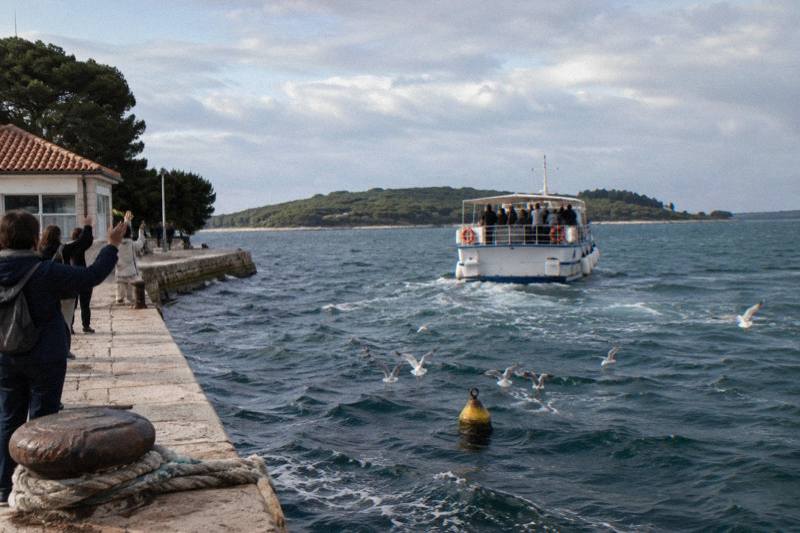
Roman Villa, Dinosaur Footprints And The Old Olive Tree On A Boat Tour That Lands On Veliki Brijun
The dinosaur footprints, the Roman villa in Verige Bay and the old olive tree all sit on Veliki Brijun, and only four of the trips covered here actually step ashore. Here is which ones, and what each sight is.
Short answer
Only four trips land on Veliki Brijun: the Day Tour From Rijeka, Day Trip From Zagreb, Boat And Island Train Combo and Kayak, Full-Day Ticket. The Rijeka trip lists the Roman villa in Verige Bay, the Safari Park and St. German's church. Sunset and dolphin cruises circle the islands without landing.
Veliki Brijun holds more than 200 dinosaur footprints, believed made 130 to 100 million years ago, and a three-toed print in a limestone block is visible the moment you step off the boat at the island port. Further along the coast, the Roman villa rustica in Verige Bay was begun in the 1st century BC, and an olive tree roughly 1,600 years old still bears fruit. These are the park's own figures, and they all belong to one island: Veliki Brijun, the largest of the 14 islands and islets that make up the national park.
The catch is simple. Most boat trips from Pula and Fažana never set foot there. They circle the archipelago, stop for a swim at Sv. Jerolim or the Fažana waterfront, watch the sunset, and come back. Only four of the trips covered here land on Veliki Brijun, and only one of them, the Day Tour From Rijeka, lists the Roman villa in Verige Bay by name on its route. Whether you see the footprints, the villa and the old olive tree depends entirely on which trip you book, so Brijuni National Park Tours sorts the landing trips from the circling ones sight by sight.
The park itself also runs a guided excursion from Fažana that is separate from every trip listed here; it includes a one-hour tourist train ride, the Safari Park and the museum exhibitions, with timed tickets bought at the park office or online. The four landing trips below are different products sold by their own operators, and each one treats the island entry differently, which is the second thing to check before booking.
Which Trips Land On Veliki Brijun?
Four trips go ashore on Veliki Brijun: Day Tour From Rijeka, Day Trip From Zagreb, Boat And Island Train Combo and Kayak, Full-Day Ticket. The Rijeka trip includes the tourist train, the Roman villa in Verige Bay, the Safari Park and St. German's church but not the entrance ticket. The Zagreb trip includes park tickets and hotel pickup. Every sunset and dolphin cruise circles without landing.
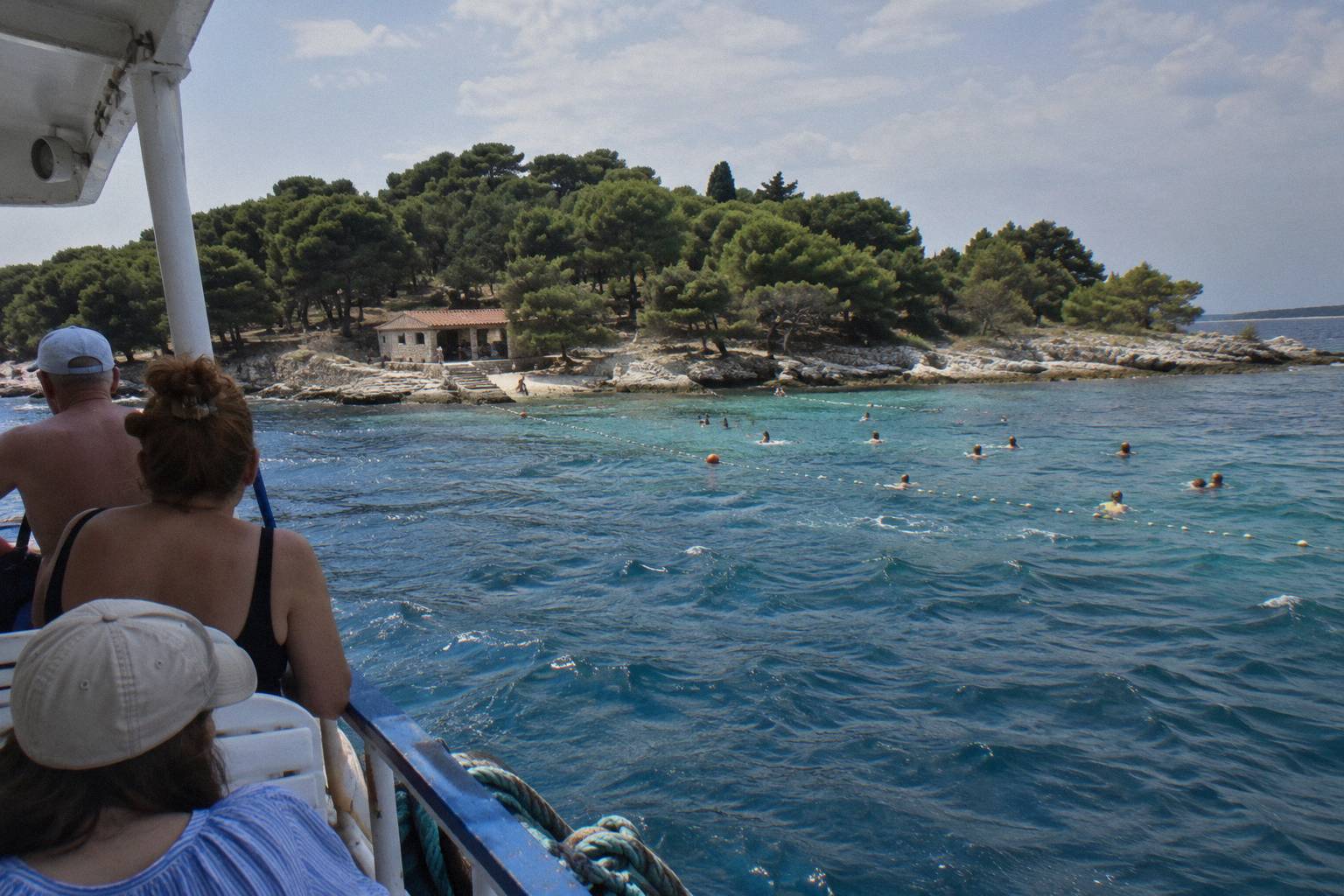
The full list of 25 trips covered here splits cleanly once you know what to look for. Twenty-one of them never land on Veliki Brijun. The sunset and dolphin cruises from Pula, including Sunset Cruise, Unlimited Drinks from €40 per person and Grilled Dinner On Board from €50 per person, pass the islands from the water. The swim trips stop at Sv. Jerolim, a separate park islet of 7.84 ha, or at the Fažana waterfront, which lies outside the park entirely. Two PECO trips include an island ticket, and the booking page shows which island.
The distinction matters because the villa, the footprints and the olive tree sit inland or along the coast of Veliki Brijun, beyond walking distance of a passing boat. The Roman villa in Verige Bay is on the west side of the island. The old olive tree grows near the port area but still on land. The dinosaur footprints are found at four sites across the archipelago, though one three-toed print greets you right at the port. None of that is visible from a boat drifting past.
For a fuller comparison of every landing and non-landing trip, the page on whether Brijuni boat tours land on the islands goes trip by trip. The four landing options compared below are the ones that put you in front of these particular sights, and each is a very different kind of day out: a road trip from Rijeka or Zagreb, a combined boat and train excursion from Fažana, or a guided kayak crossing with a full-day park ticket.
| Trip | From | Duration | Island entry | Price |
|---|---|---|---|---|
| Day Tour From Rijeka | Rijeka | 11 hours | Not included | Check the booking page for the price |
| Day Trip From Zagreb | Zagreb | 12 hours | Included | From €255 per person |
| Boat And Island Train Combo | Fažana | 4 to 6 hours | Bought on the island | From €150 per person |
| Kayak, Full-Day Ticket | Fažana | 3 hours 30 minutes | Full-day ticket included | From €75 per person |
Where Are The Dinosaur Footprints On Brijuni?
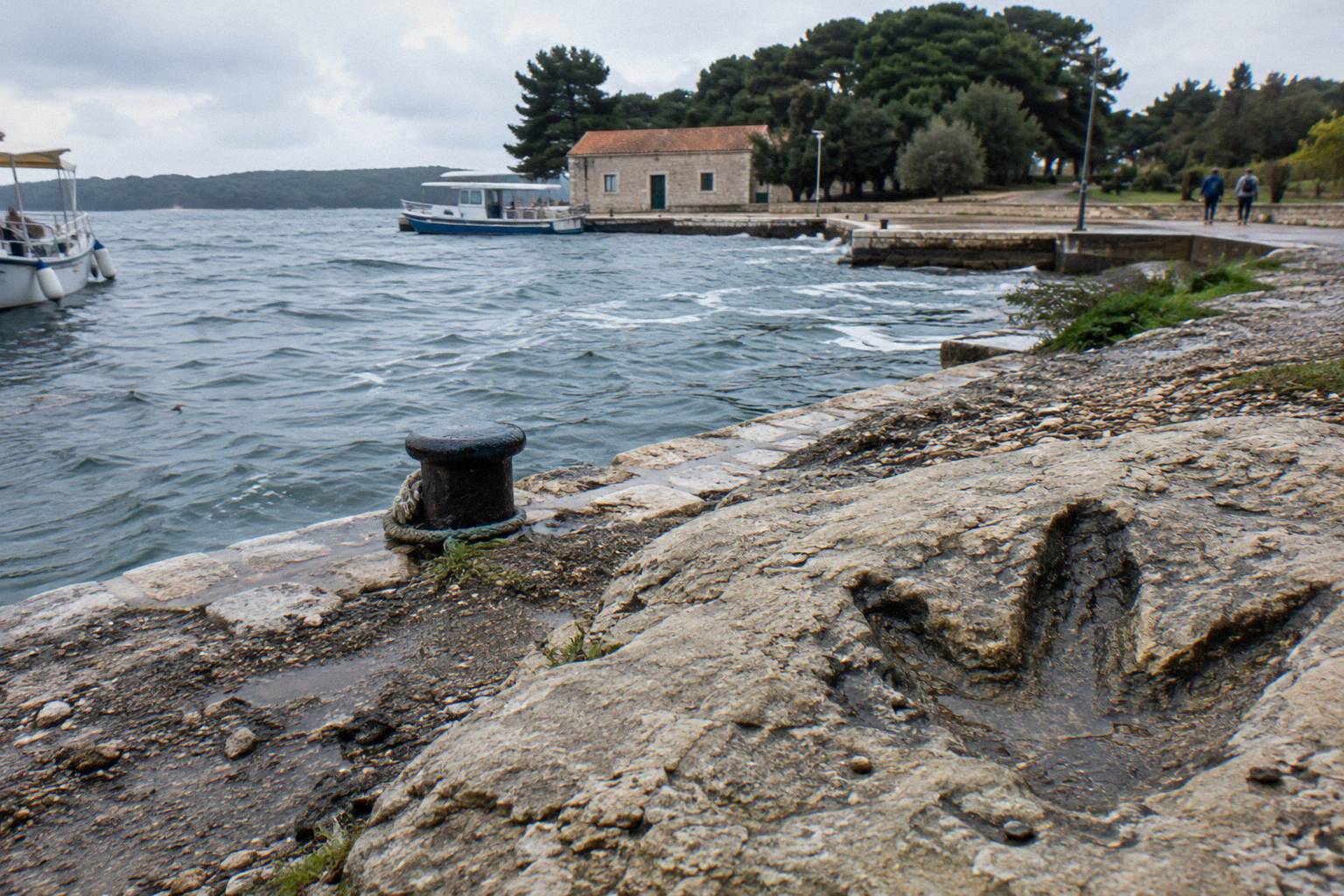
More than 200 dinosaur footprints have been found on the Brijuni islands, believed made 130 to 100 million years ago, at four sites: Veliki Brijun, Vanga, Galija and Vrsar. The easiest one to see is a three-toed print in a limestone block visible when leaving the boat at Veliki Brijun port. On Veliki Brijun, tracks can be seen including at Cape Ploce and Cape Vrbanj, and a theropod sculpture stands at Cape Vrbanj.
This is the park's own accounting, from its page on the footprints. The prints were left by dinosaurs walking coastal mud that hardened into limestone over tens of millions of years, long before the islands were islands: the park notes that ten thousand years ago the Brijuni were still part of the Istrian mainland, separated only by the shallow Fažana Channel, which reaches just 12 m deep. The detail is worth absorbing, because it means the animals that left the prints walked on land continuous with the Istrian peninsula, not on an offshore island.
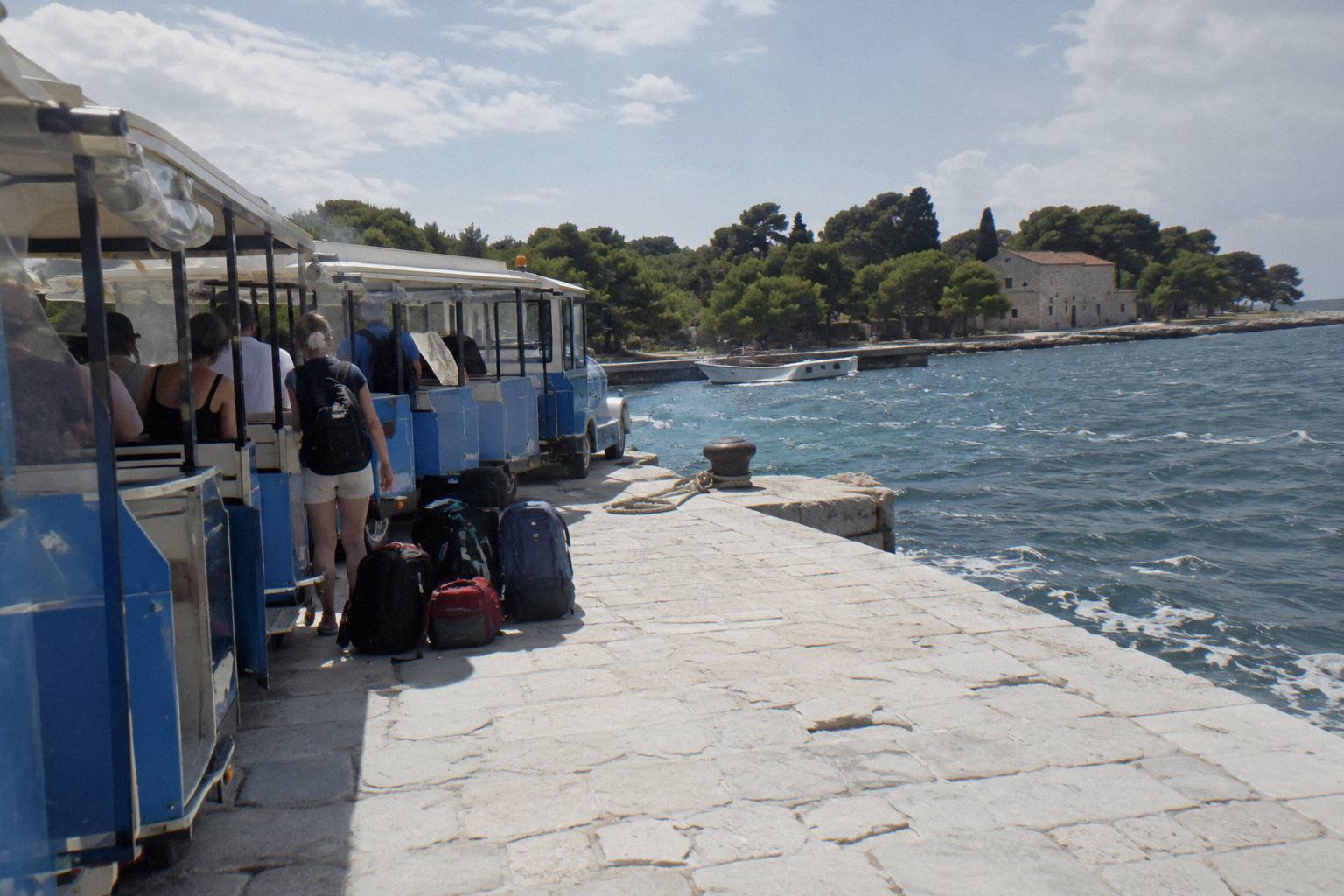
The port print is the democratic one. Every visitor who arrives at Veliki Brijun by boat passes it, and that includes passengers on all four landing trips. You do not need a guided walk to find it; it sits in a limestone block at the landing itself. The other locations, Cape Ploce and Cape Vrbanj with its theropod sculpture, lie further around the island's 25.9 km coastline, the longest of any island in the park, and reaching them means time on the island, whether on foot, by tourist train or with a rented electric car, scooter or bicycle under the park's individual Pocket Guide ticket.
| Site | Where | What you see | Reach |
|---|---|---|---|
| Veliki Brijun port | At the boat landing | A three-toed print in a limestone block | On arrival, all landing trips |
| Cape Ploce | Veliki Brijun coast | Dinosaur tracks | Time on the island, foot or wheels |
| Cape Vrbanj | Veliki Brijun coast | Tracks plus a theropod sculpture | Time on the island, foot or wheels |
| Vanga, Galija, Vrsar | Separate islets | Tracks at three outlying sites | No trip here lands on them |
Which of the four landing trips gets you close to the prints beyond the port block depends on how the day is structured. The Day Tour From Rijeka lists the tourist train, the Roman villa, the Safari Park and St. German's church on its route, with the entrance ticket excluded. The Day Trip From Zagreb includes entrance tickets, a boat ride, a guide and a walking tour or panoramic train. The kayak trip lands with a full-day park ticket and return ferry included, leaving free time to explore. The full park account of the footprints is on the park's site at the Brijuni dinosaur footprints page.
A reader deciding by footprint alone should weigh free time against structure. The kayak trip's 3 hours 30 minutes covers the guided paddle and the ferry, so island wandering time is limited by your own schedule back to Fažana. The Rijeka day is 11 hours end to end, most of it on the road, but the island portion follows a set itinerary that keeps moving. If the footprints at Cape Vrbanj matter to you, ask the operator before booking whether the route reaches them; no trip here lists them by name.
What Is The Roman Villa In Verige Bay?
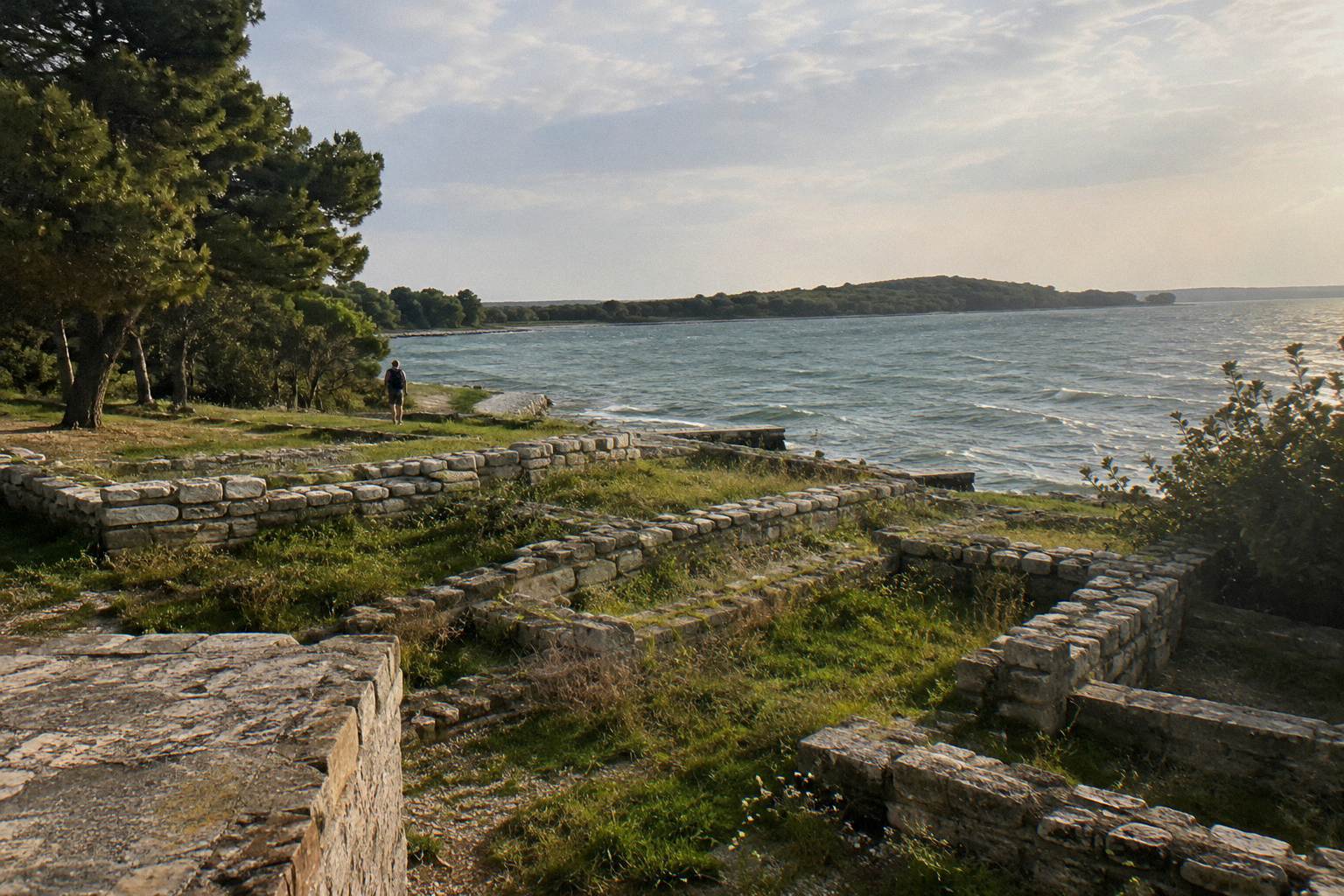
The Roman villa rustica in Verige Bay is a ruined country estate on the west coast of Veliki Brijun where building began in the 1st century BC and reached its greatest splendour in the 1st century AD. Temples to Neptune, the Capitoline Triad and Venus stood at the head of the bay, and parts of the complex stayed in use until the 6th century.
The villa is part of the Roman Emperors Route, a cultural route certified by the Council of Europe, and the park describes promenades running about one kilometre along the sea. In its prime this was a wealthy residential complex with a full religious quarter, not a farmhouse; the temples at the end of the bay served an estate whose owners could afford marble and terraces above the water. Walking the site today means low walls, foundations and the line of the old shoreline, with Verige Bay itself unchanged behind them.
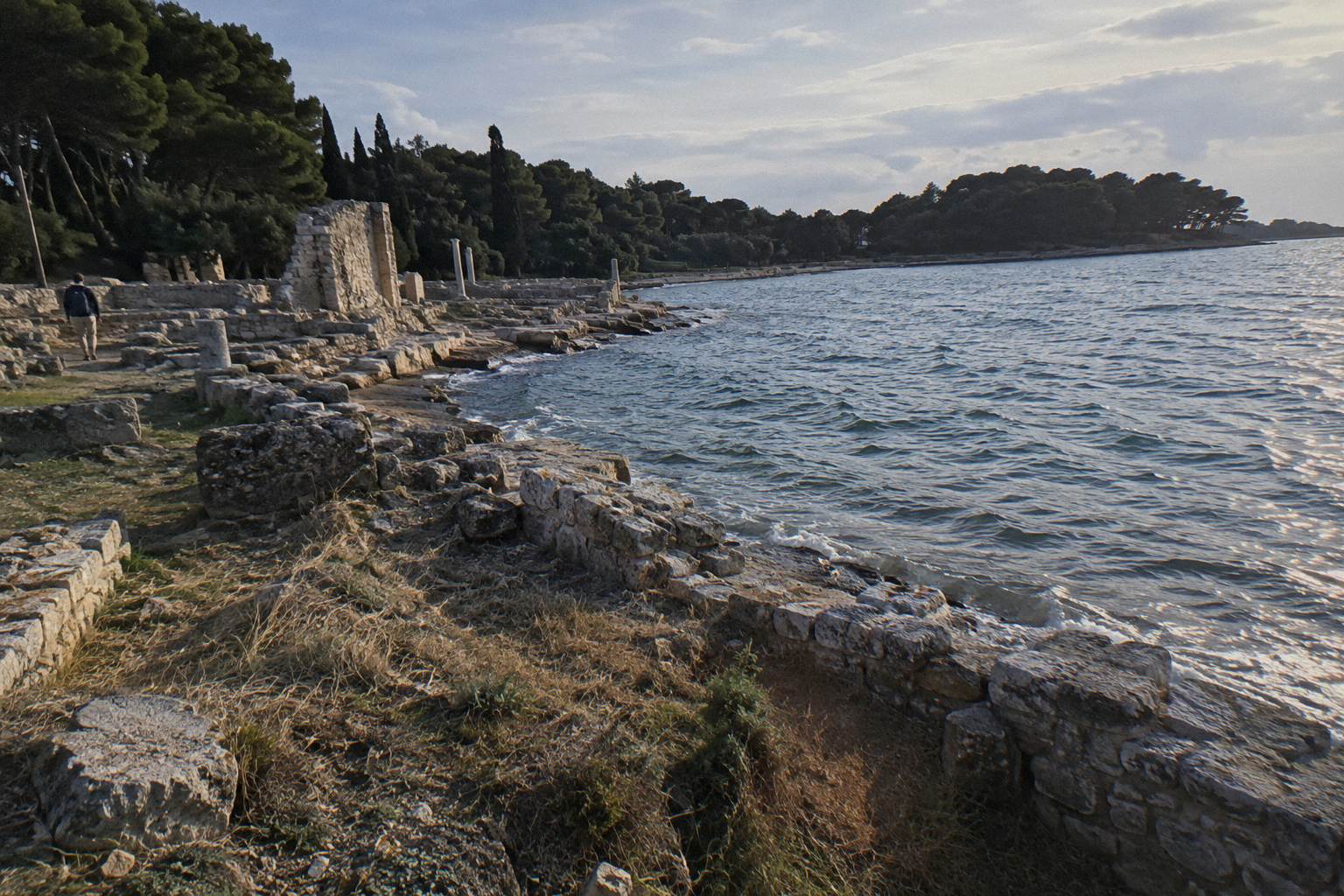
Among the trips covered here, exactly one names the villa on its route: the Day Tour From Rijeka, an 11-hour road trip from Rijeka that lands on Veliki Brijun with the tourist train, the Roman villa in Verige Bay, the Safari Park and St. German's church, with the entrance ticket excluded. Its price is shown on the booking page. If the villa is the reason for your visit, that is the trip built around it, and it can be checked in one step through the Rijeka day tour to the island or check availability directly.
The other landing trips do not list the villa, which is not the same as saying it is unreachable. The Zagreb day trip includes a walking tour or panoramic train, and the kayak trip leaves you on the island with a full-day ticket and time of your own; the park's own panoramic tour along the west side of Veliki Brijun passes the Verige Bay villa, so the train routes do run past it. But no claim is made here that any trip other than the Rijeka tour visits it. The park's account of the site, including the temples and the Council of Europe certification, is at the park's Verige Bay page.
One more Roman-era site deserves a line: the Byzantine castrum in Madona Bay, a little over 1 hectare, which the park calls its richest archaeological site. Its defensive walls date from the mid 5th century, and it holds St. Mary's basilica and the church of St. Peter from the 6th century. No trip listed here names the castrum on its route; it is included here so you know it exists on the island and is not the same thing as the Verige Bay villa.
How Old Is The Old Olive Tree On Brijuni?
The old olive tree on Veliki Brijun is about 1,600 years old, dated in the 1960s by the Ruder Boskovic Institute in Zagreb using carbon testing. It was split in a storm in the 1970s but survived, with a crown 22 by 8 metres and a height of 6 metres, and it still bears fruit and yields olive oil.
A tree that germinated in late antiquity, roughly the era when the Verige Bay villa's last parts were falling out of use in the 6th century, is a strange thing to stand beside. The park keeps it as one of the signature sights of Veliki Brijun, and the fact that it still produces olives each year is the detail visitors remember. The storm split left it growing as several trunks from one root system, which is partly why the crown spreads so wide.
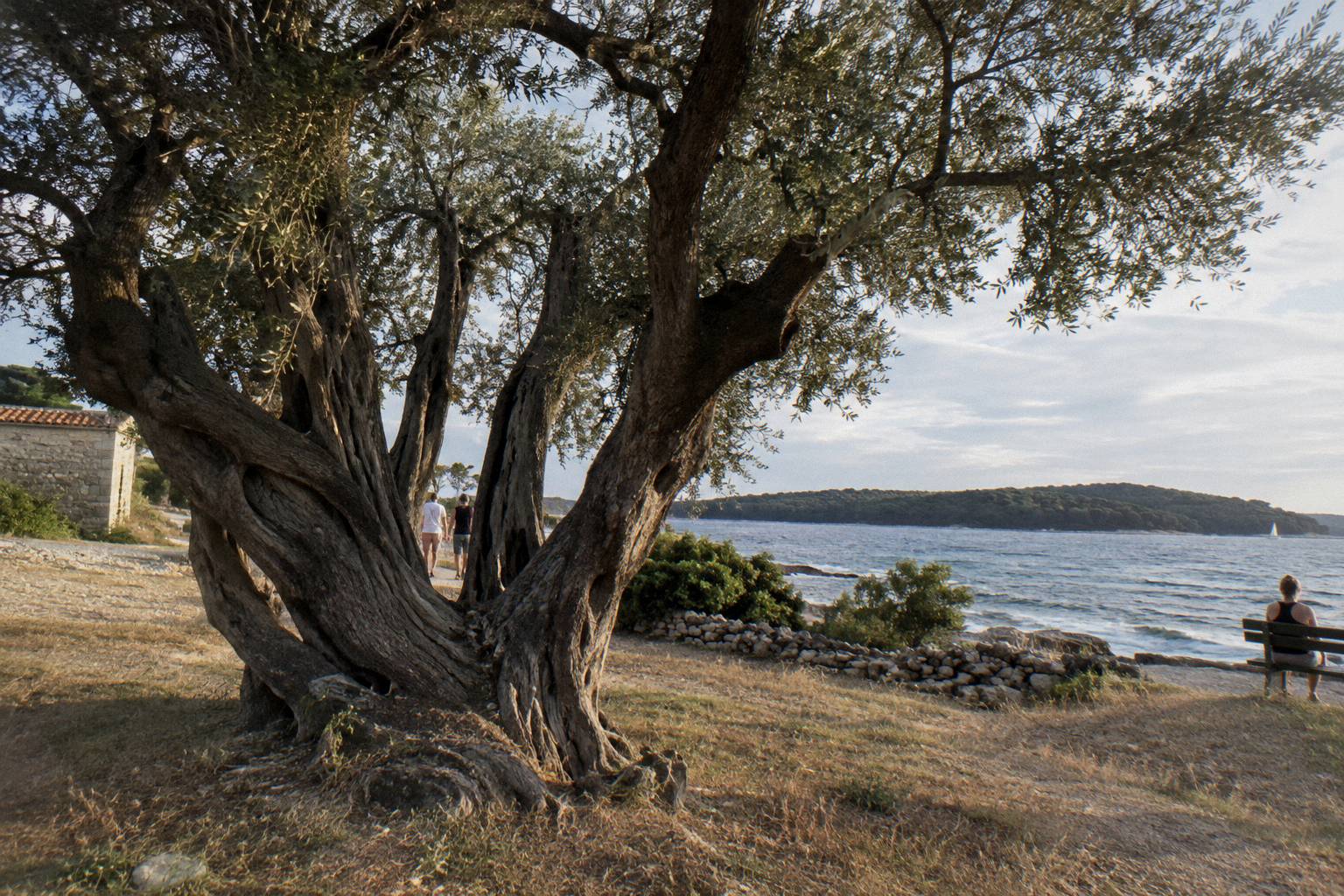
No trip covered here lists the olive tree by name on its route. Like the footprints beyond the port and the castrum in Madona Bay, it is a sight you reach by being on the island with time to move, and the landing trips differ mainly in how much of that time they give you. The kayak trip pairs a guided paddle with a full-day park ticket, so the island hours are yours to spend. The two road day trips follow set itineraries. The guide to Veliki Brijun by train, bike or on foot breaks down what each way of moving around the island lets you cover.
Practical note for anyone budgeting island time: the park's Safari Park is just over 3 km from the port, and these sights are spread between the port, the west coast and the bays. Walking covers it, but slowly. Electric cars, scooters and bicycles can be rented on the island under the park's individual Pocket Guide ticket, and dogs are allowed on a leash though not in the train, museums or Safari Park. The park's own page on the tree, with the dating and dimensions, is at the park's old olive tree page.
Which Landing Trip Fits Which Kind Of Visitor?
The four landing trips serve different visitors: Day Tour From Rijeka for coast-based travellers who want the Roman villa on the itinerary, Day Trip From Zagreb from €255 per person for anyone staying inland with park tickets and hotel pickup included, Boat And Island Train Combo from €150 per person for a half-day from Fažana, and Kayak, Full-Day Ticket from €75 per person for active visitors who want free island time.
The Fažana-based combo, run by Adriatic Way, is the most packed half-day of the four: 4 to 6 hours covering a boat tour of all 14 islands with guided narration, a landing on Veliki Brijun with the scenic tourist train, and a swim at Sv. Jerolim. The park ticket is not included and is bought on the island, and the Sv. Jerolim swim ticket is also bought on the island. A bottle of water is provided, and a tombola or quiz with prizes runs on board. It suits visitors already staying in Fažana or Pula who want the train and the island in one outing without a full day.
The kayak trip, run by Top Kayak Tour Pula - Go To Istria, includes the guided paddle with snorkelling equipment, life jacket, dry bag, a full-day park entrance ticket and the return ferry Fažana to Brijuni to Fažana, and it paddles past Fort Minor on Mali Brijun, the island that holds the Austro-Hungarian Fort Brioni Minor. Meals are not included. It is the cheapest route to a full-day island ticket from €75 per person, and the only one where you arrive under your own power.
Between them sit the two road trips. The Rijeka tour, 11 hours with the tourist train, the Verige Bay villa, the Safari Park and St. German's church, excludes the entrance ticket. The Zagreb trip, 12 hours from €255 per person with Budget Transfer Croatia, includes entrance tickets, the boat ride to the island, a guide, hotel pickup and drop-off, port pickup and drop-off, and a walking tour or panoramic train; food and drinks are not included, and the minimum age is 1. Both are long days with hours of motorway, so they make sense mainly for people based in those cities rather than on the Istrian coast.
| Trip | Best for | What is included | What you pay extra |
|---|---|---|---|
| Day Tour From Rijeka | Roman villa on the itinerary | Train, villa, Safari Park, St. German's church | Entrance ticket |
| Day Trip From Zagreb | Inland-based visitors | Tickets, boat, guide, hotel pickup | Food and drinks |
| Boat And Island Train Combo | A Fažana half-day with everything | 14-island boat tour, train, quiz | Park ticket, Sv. Jerolim swim ticket |
| Kayak, Full-Day Ticket | Active visitors, free island time | Kayak, gear, park ticket, return ferry | Meals and drinks |
Do You Need A Park Ticket On Top Of The Trip Price?
It depends on the trip. Day Trip From Zagreb and Kayak, Full-Day Ticket include the park entrance. Day Tour From Rijeka and Boat And Island Train Combo do not, so the ticket is bought separately on the island. On the Fažana combo, the Sv. Jerolim swim ticket is also bought on the island. The park sells timed tickets at its office at Brionska 10 in Fažana or online.
The park's own ticketing rules apply to any ticket you buy yourself. Tickets are timed, and entering earlier or later than the time on the ticket is not possible. No print-out is needed, since the barcode is shown when boarding. Tickets cannot be exchanged or refunded. Children up to 7 go free, and groups of 25 or more get a discount. Individual visitors can return to Fažana on any park boat. The full breakdown, without which no island day budget is complete, is in the guide to the Brijuni park ticket price and what it includes.
The timing rule is the one that catches people. If your trip's ferry or boat arrives at Veliki Brijun at a set hour, your separately bought park ticket needs to match that hour, which is why the trips that include the ticket are simpler: the operator has already reconciled the two. On the Rijeka tour and the Fažana combo, the sequencing is yours or the guide's to manage, so confirm the entry arrangement with the operator before the day.
Can You Combine These Sights With The Safari Park Or Tito's Island?
Yes, on the trips that land with enough island time. The Rijeka tour lists the Safari Park on its route alongside the Roman villa and St. German's church, and the park's excursion and the trains pass the former zoo grounds and the museum exhibitions. The Safari Park is about 9 ha at the north end with around 80 herbivores, including Lanka the Indian elephant, a gift from Indira Gandhi in 1972.
The same island holds the Tito-era layer: the White Villa that became his official residence in 1953, the 1984 photo exhibition whose flags show the 60 countries whose representatives made 90 visits, and Koki the yellow-crested cockatoo. Which of these a given landing trip actually shows depends on its itinerary; the Rijeka tour names the Safari Park but not the exhibitions. Two companion pages go deeper: what the Safari Park is like on a landing tour and what Tito's island shows a landing visitor.
One rule travels with any visit: animals in the Safari Park must not be fed, and park wardens may ask to see tickets and identity documents anywhere on the island. The circling trips are covered elsewhere among the trips here, but for the footprints, the villa and the olive tree, landing is the only route in.
For anyone weighing a landing day against a cheaper circling cruise, the swim and sail options are covered in the guide to Brijuni snorkel and swim tours; they are fine trips, but they will not put you in front of any of these sights.
The kayak trip pairs best with a second day in Fažana: paddle the channel once with the guided trip, then return on the park's own boats as an individual visitor, since the kayak ticket is a full-day one. Visitors who prefer dry land and a fixed itinerary get the same island sights through the train-based trips, at a higher price and with the ticket logistics handed either to the operator or to themselves.
Common Questions About The Sights On Veliki Brijun
Can You See The Dinosaur Footprints Without A Landing Tour?
Only the port print, and only by landing: it sits in a limestone block visible when leaving the boat at Veliki Brijun port. The circling cruises do not land, so they see none of the footprint sites. The tracks at Cape Ploce and Cape Vrbanj require time on the island.
Which Trips Visit The Roman Villa In Verige Bay?
Among the trips covered here, only the Day Tour From Rijeka lists the Roman villa in Verige Bay on its route, alongside the tourist train, the Safari Park and St. German's church. The entrance ticket is not included. No other trip makes that claim.
Is The Old Olive Tree Really 1,600 Years Old?
The park dates the tree to about 1,600 years using carbon testing carried out by the Ruder Boskovic Institute in Zagreb in the 1960s. It was split by a storm in the 1970s but survived and still bears fruit and yields olive oil.
Do You Need To Book A Brijuni Boat Tour In Advance To See These Sights?
For the landing trips, yes, booking ahead is the practical route, especially in summer, since the park's tickets are timed and the trips that include them reconcile the entry hour for you. The guide to booking in advance covers the timing question in detail.
Do The Sunset Cruises From Pula See The Roman Villa Or The Footprints?
No. The sunset and dolphin cruises, including Sunset Cruise, Unlimited Drinks from €40 per person, circle the islands without landing. The footprints, the villa and the olive tree are all on land on Veliki Brijun, and only the four landing trips go ashore there.
Is The Byzantine Castrum The Same As The Roman Villa?
No. The Roman villa rustica stands in Verige Bay and was begun in the 1st century BC. The Byzantine castrum is a separate fortified site in Madona Bay, a little over 1 hectare, with walls from the mid 5th century and two 6th-century churches. No trip listed here names the castrum on its route.