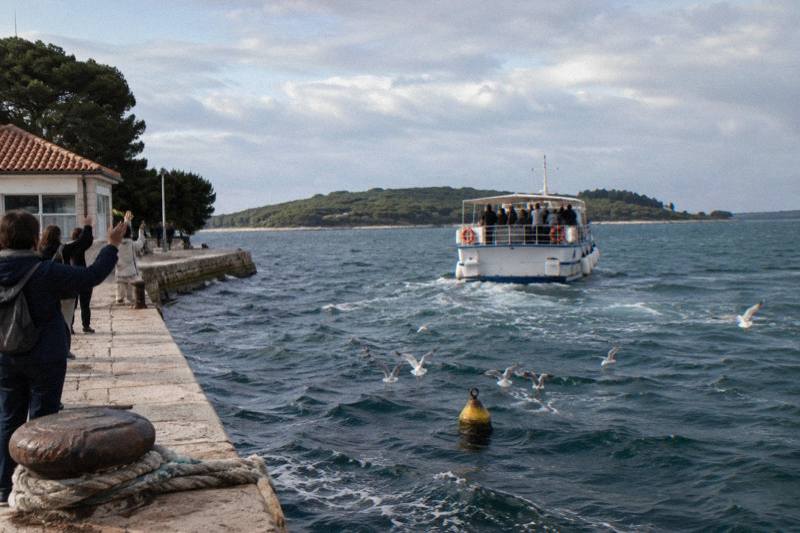
Tito On Brijuni: What The Landing Tour Shows
Josip Broz Tito first came to Brijuni in 1947 and made the White Villa his official residence in 1953. His exhibition, his Cadillac and his cockatoo are still on Veliki Brijun, and only four of the trips covered here set foot on the island.
Short answer
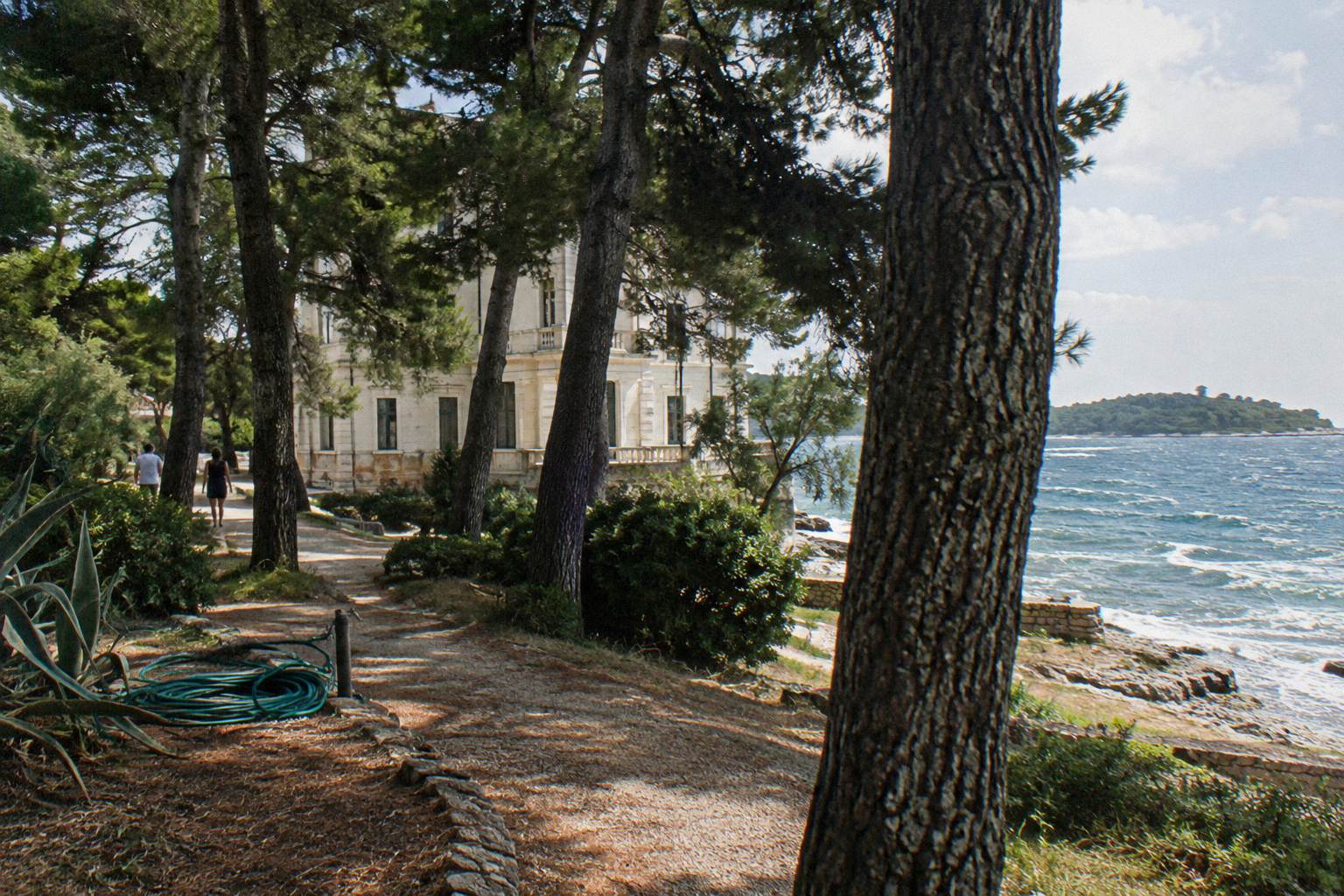
Tito's Brijuni is visible only on a trip that lands on Veliki Brijun: the photo exhibition 'Josip Broz Tito on Brioni', opened in 1984, his 1953 Cadillac Eldorado displayed in front of the museum, and the story of the White Villa, his official residence from 1953. Four trips go ashore; every sunset and dolphin cruise stays on the water.
Josip Broz Tito first visited Brijuni in 1947, and from 1953 the White Villa on Veliki Brijun served as his official residence. He spent about four months a year on the islands on average, and his last stay ended on 29 August 1979. What remains is a small, dense layer of history on one island: a photo exhibition, a car, a villa and a cockatoo. Seeing any of it requires a trip that actually goes ashore on Veliki Brijun, which is a much smaller group of trips than most visitors assume.
The setting helps explain why the islands suited a summer capital. Brijuni is a group of 14 islands and islets off the west coast of Istria, 3,395 hectares in total, of which 2,651.7 hectares are sea and 743.3 hectares land. The park's own figures put the mean annual air temperature at 13.9 °C, with summer means of 22.2 °C and sea temperatures of 22 to 25 °C in summer. Veliki Brijun, the largest island, has 25.9 km of coastline, indented enough to hide bays, forts and villas from one another, which is precisely what a head of state hosting 90 visits would have wanted.
What Did Tito Actually Leave On Brijuni?
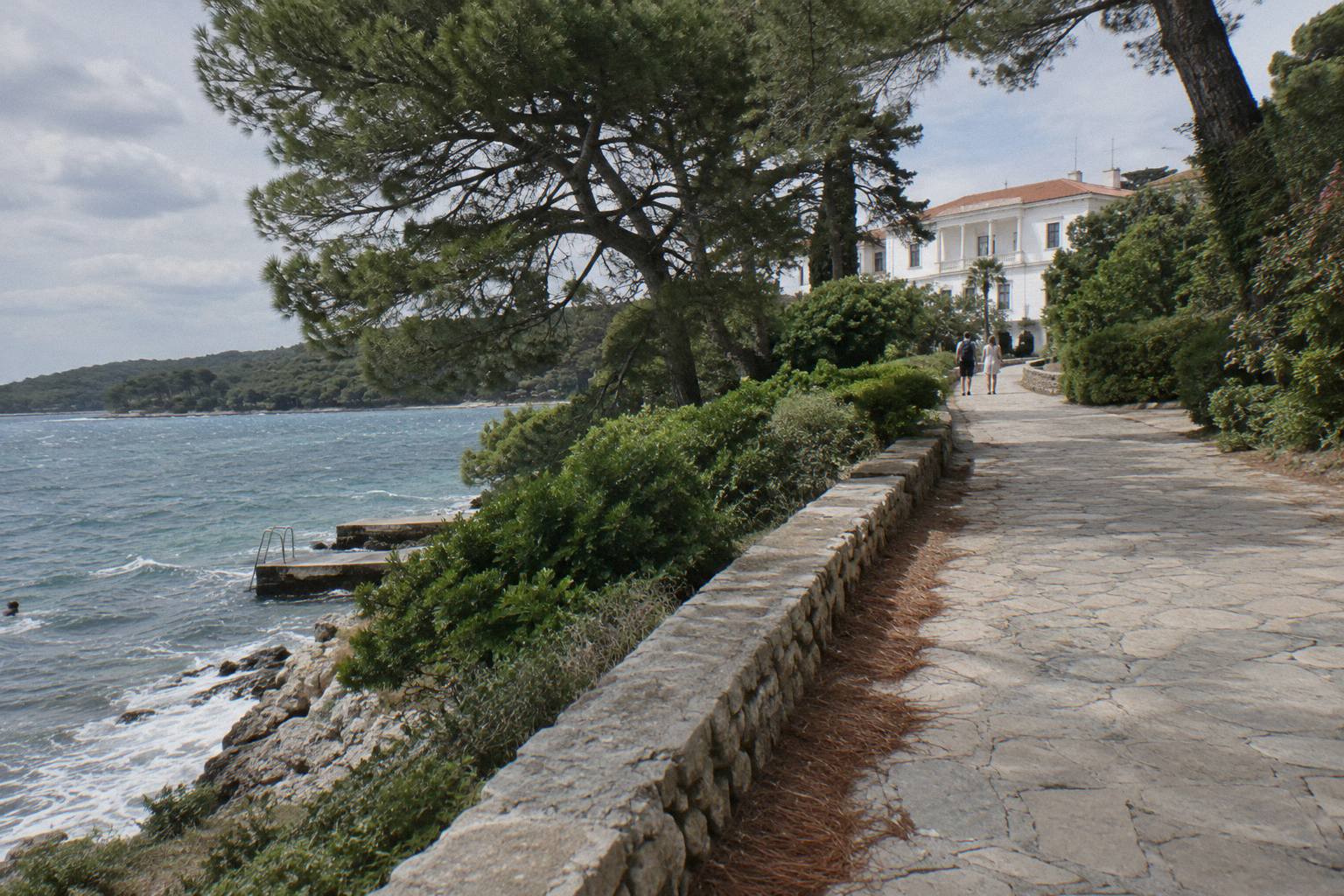
Tito left four things a visitor can still encounter: the White Villa, his official residence from 1953; the photo exhibition 'Josip Broz Tito on Brioni', opened in 1984; his 1953 Cadillac Eldorado convertible, displayed in front of the museum; and Koki, his yellow-crested cockatoo, a legend of the islands. A companion exhibition from 1993 tells the earlier Kupelwieser story.
The photo exhibition is the anchor. It opened in 1984, five years after Tito's death, and its flags show the 60 countries whose representatives made 90 visits to the islands while he was in residence. The numbers give the place its strange weight: Brijuni was not a museum of statehood so much as a working summer capital, where Tito, Nasser and Nehru met in 1956 and signed what became known as the Brijuni Declaration. That single meeting is why the islands carry a chapter in Cold War itineraries at all, and the exhibition is where the chapter is told on the island itself.
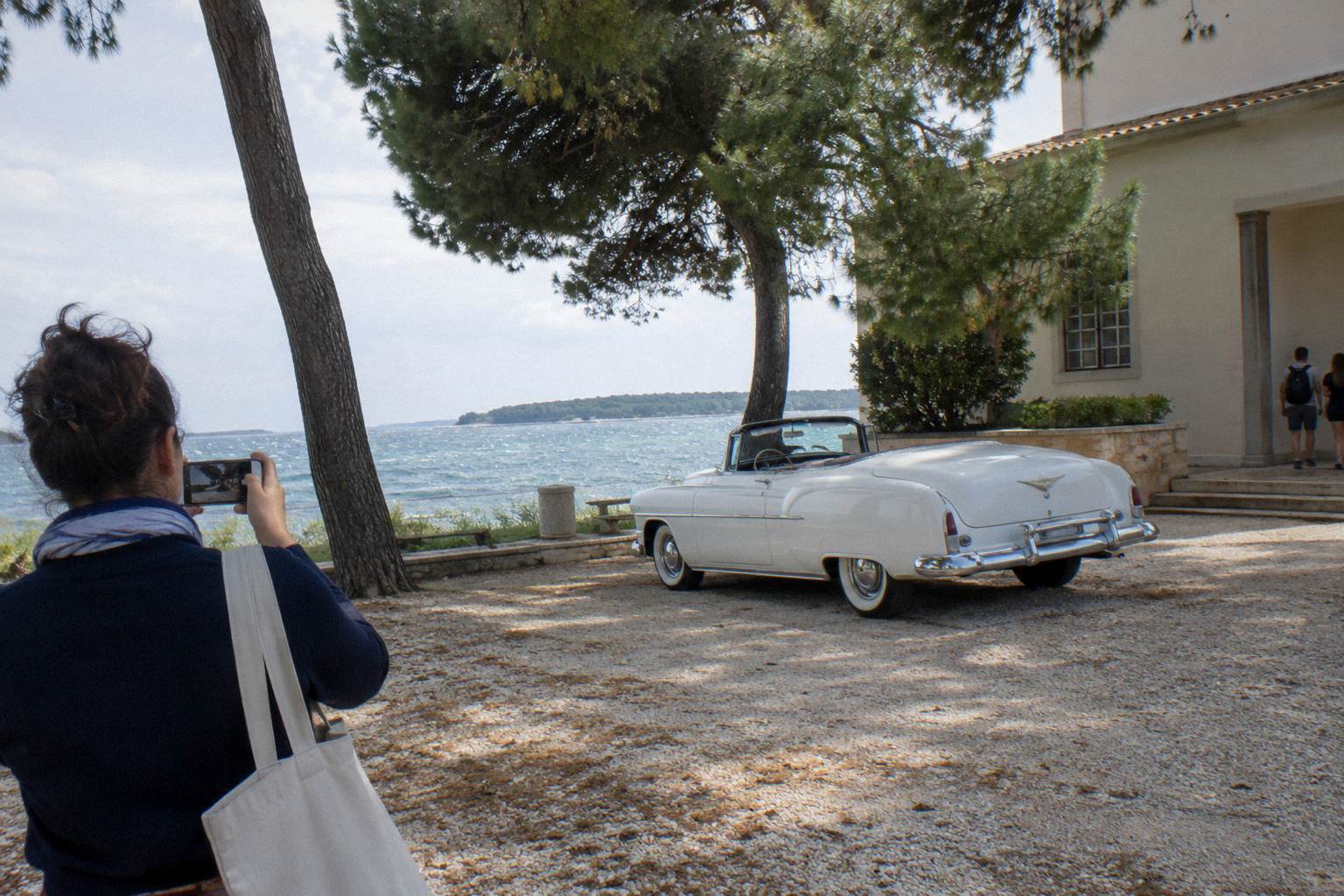
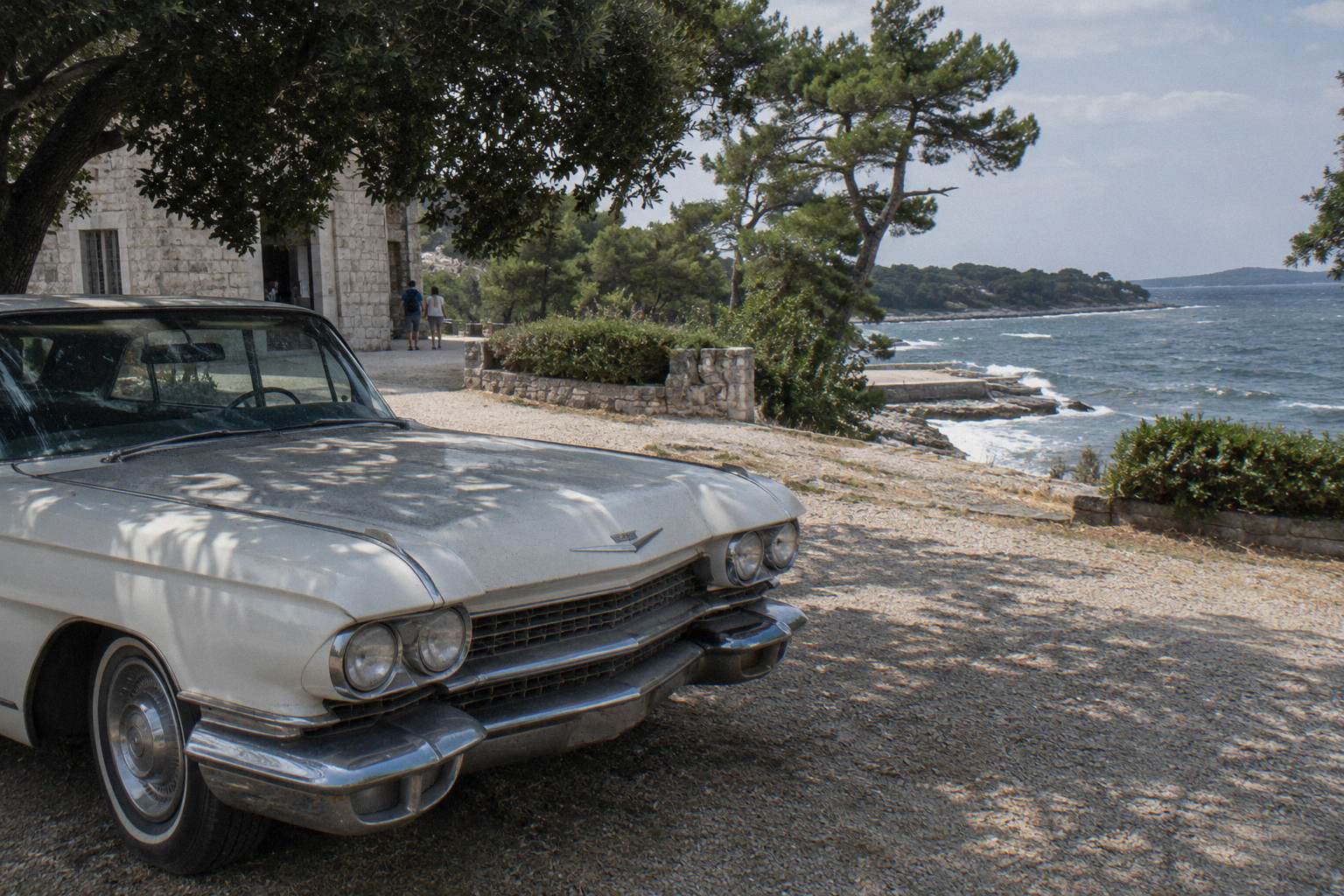
The Cadillac has the more unusual biography. It is a Cadillac Eldorado convertible that arrived in 1953, a gift from Croatian emigrants in Canada, and it was used in the park until 1979, covering 18,000 miles. It now stands in front of the museum. Rental of the car is by reservation only and is not available all year, so treat any drive as a possibility to ask about rather than a plan to build a day around.
Beside the Tito material, the exhibition 'Memories of an Old Austrian' (1993) tells how Paul Kupelwieser turned malarial islands into a resort at the turn of the twentieth century. The two stories sit in the same small museum complex, and the park's own pages tie them together at the permanent exhibitions on Brijuni: the aristocratic health resort Tito inherited, and the socialist summer residence he made of it.
| Site or object | Dates | What it is | Where on the island |
|---|---|---|---|
| White Villa (Bijela vila) | Official residence from 1953 | Tito's residence during about four months a year on the islands | Veliki Brijun |
| Photo exhibition 'Josip Broz Tito on Brioni' | Opened 1984 | Flags of 60 countries whose representatives made 90 visits | Within the museum exhibitions |
| Cadillac Eldorado convertible | Arrived 1953, used until 1979, 18,000 miles | Gift from Croatian emigrants in Canada; rental by reservation, not available all year | In front of the museum |
| Koki the cockatoo | A legend of the islands | Tito's yellow-crested cockatoo | Veliki Brijun |
| 'Memories of an Old Austrian' | 1993 | How Paul Kupelwieser turned malarial islands into a resort | Within the museum exhibitions |
Reading down that table is the whole Tito itinerary in five lines, and every line sits within walking distance of the others. That compactness is what makes a landing day work: the history does not compete with the Safari Park or the bays for time, it fills the hour or two around them.
Which Trips Actually Go Ashore On The Island?
Only four of the twenty-five trips covered here land on Veliki Brijun: Kayak, Full-Day Ticket (from €75 per person), Boat And Island Train Combo (from €150 per person), Day Trip From Zagreb (from €255 per person) and Day Tour From Rijeka (check the booking page for the price). Every sunset, dolphin, swim and sail trip stays on the water.
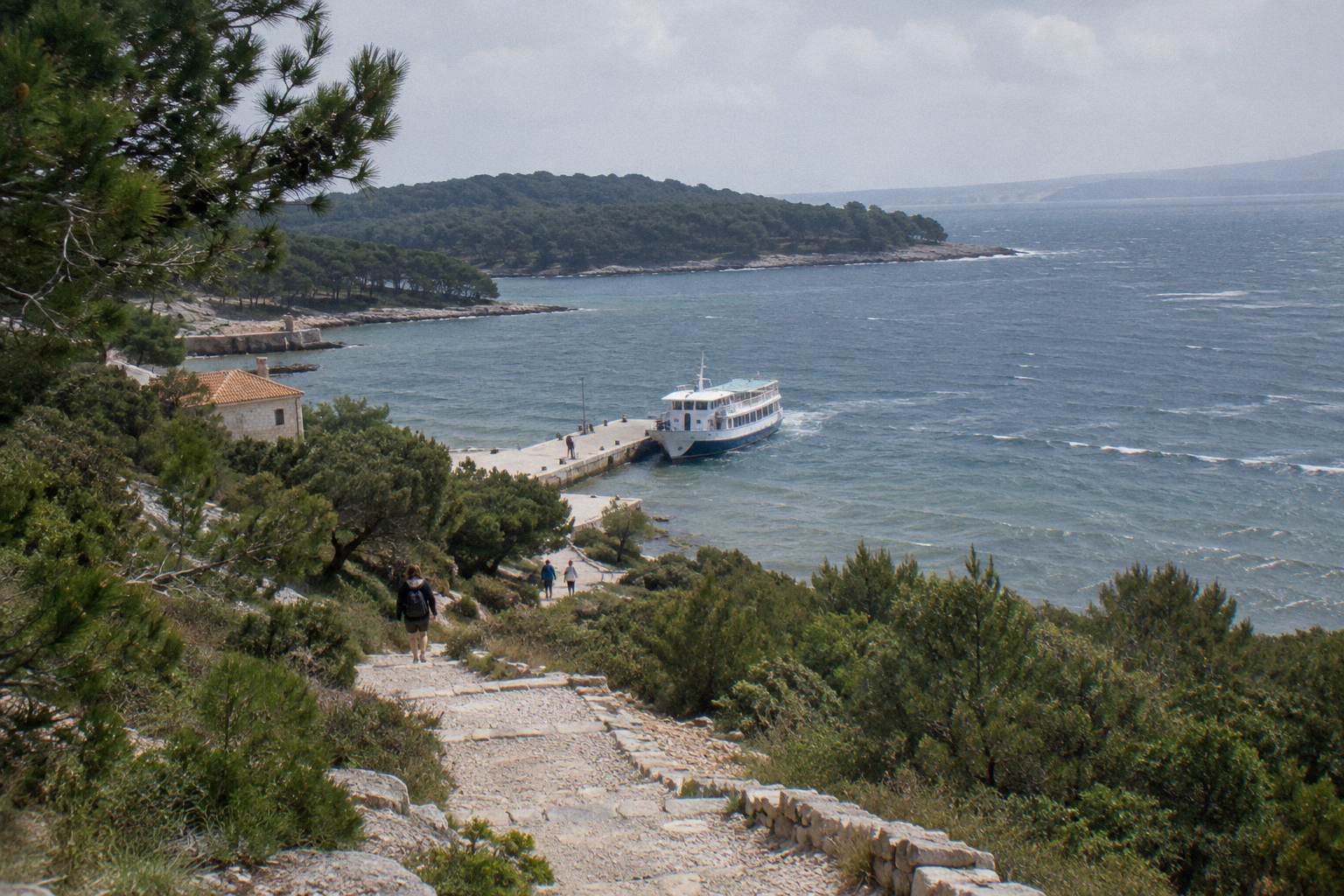
This is the single most important distinction on the page. A boat that circles the 14 islands, or stops at Sv. Jerolim for a swim, is a lovely thing, but it does not bring you within walking distance of the museum, the exhibition or the Cadillac. The four landing trips differ in what they include, especially on the park ticket, which is the detail that changes the day most.
| Trip | Price | Departs from | Park ticket | What the island time looks like |
|---|---|---|---|---|
| Kayak, Full-Day Ticket | from €75 per person | Fažana | Included, full-day | Guided paddle, then the island with the ferry back included |
| Boat And Island Train Combo | from €150 per person | Fažana | Not included, bought on the island | Tourist train on Veliki Brijun, boat tour of the 14 islands, Sv. Jerolim swim |
| Day Trip From Zagreb | from €255 per person | Zagreb | Included | Boat ride, guide, walking tour or panoramic train, hotel pickup |
| Day Tour From Rijeka | check the booking page for the price | Rijeka | Not included | Tourist train, Roman villa in Verige Bay, Safari Park, St. German's church |
Two of the four include the park ticket; two do not, and the ticket is bought on the island or excluded. The Zagreb and Rijeka trips are road journeys first, 12 and 11 hours door to door, so the island is the middle of a long day rather than the whole of it. If you want to read the wider picture of who lands and who circles, the comparison of trips that land and trips that stay afloat lays it out trip by trip.
The Rijeka day tour names its island stops plainly: the tourist train, the Roman villa in Verige Bay, the Safari Park and St. German's church. The Zagreb trip lists a boat ride, a guide at the park, a walking tour or the panoramic train, and hotel pickup. Which of the Tito stops each itinerary reaches at leisure depends on the day's plan, so if the exhibition matters to you, say so to the guide once you are on the island.
The water-only trips deserve one plain sentence so nobody books the wrong thing for the wrong reason. The Sunset Cruise, Unlimited Drinks (from €40 per person) circles all 14 islands with no landing; the sunset sails from Marina Veruda carry Brijuni views only; the swim trips stop at Sv. Jerolim or the Fažana waterfront, neither of which is Veliki Brijun. All of them can be excellent evenings. None of them shows you a single Tito object.
Between the four, the Fažana departures compress the most island time into the least total day, which is why they suit a stay in Pula or Fažana. The Zagreb and Rijeka versions make sense when Brijuni is the excursion and the coast is not where you are sleeping.
Is The Kayak, Full-Day Ticket Trip A Good Way To Reach The Tito Sites?
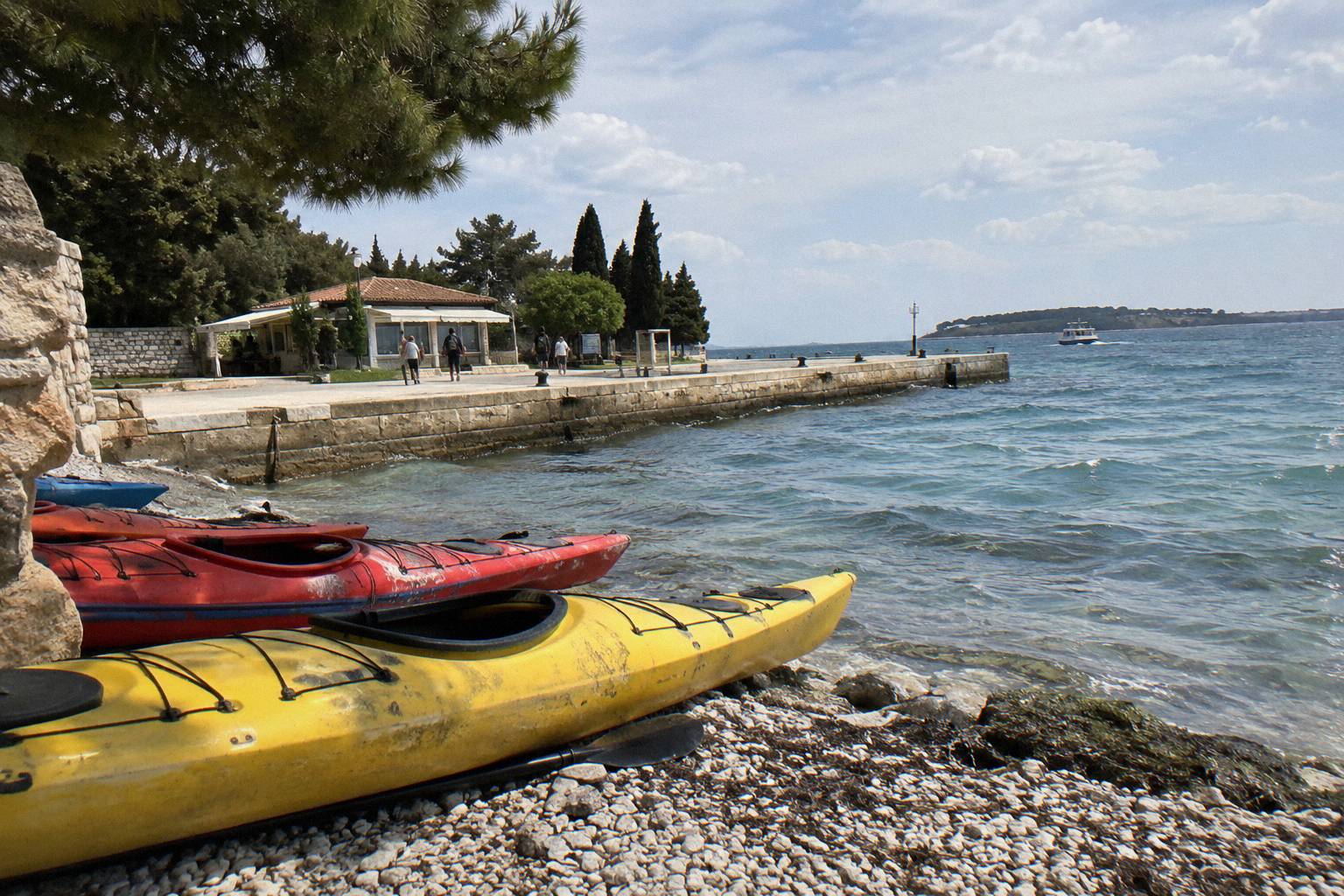
Yes, with a caveat about energy: the trip lands on Veliki Brijun with a full-day park ticket and return ferry Fažana to Brijuni to Fažana included, from €75 per person, so the museum and exhibition are reachable on foot once the paddle ends. The caveat is that the guided kayak comes first, 3 hours 30 minutes in total with snorkelling equipment.
The trip runs from Fažana with a certified local guide, paddling past Fort Minor on Mali Brijun before the crossing. Dry bags, life jackets, kayak, paddle and snorkel gear are all included; meals are not, and neither are personal expenses on the island such as café visits, so bring snacks and water. Once ashore, the full-day ticket covers the island itself, and the return ferry is already paid.
Because the ticket is included, there is no second queue at the park office, which is the detail that most often eats into a self-built day. How the island hours get spent after the paddle is up to you: the Safari Park is just over 3 km from the port, and the museum complex with the Tito exhibition is the natural first stop. The guide to the kayak trip with the park ticket from Fažana covers the paddling side in full.
For the day that pairs Tito's island with time on the water, the kayak trip with the full-day ticket is the landing option with the most water in it; you can check availability and see the departure dates in one step.
Free cancellation applies up to 24 hours before the start, so the kayak day can be booked ahead without locking in the weather.
The departure side is simple too. The kayak trip leaves from Fažana, and the town sits roughly 8 to 10 km from Pula by road, with a city bus linking the Pula bus station to Fažana in about 25 to 30 minutes. Pula Airport is 15 km from Fažana, per the park's own figures, so a landing day fits even a short stay. Croatia uses the euro, and every price quoted is in euros.
What Do The Other Three Landing Trips Include?
The three alternatives split by ticket and by origin: the Boat And Island Train Combo (from €150 per person, Fažana) includes the train and a 14-island boat tour but not the park ticket; the Day Trip From Zagreb (from €255 per person) includes entrance tickets and hotel pickup; the Day Tour From Rijeka includes the train, the villa, the Safari Park and St. German's church but excludes the entrance ticket.
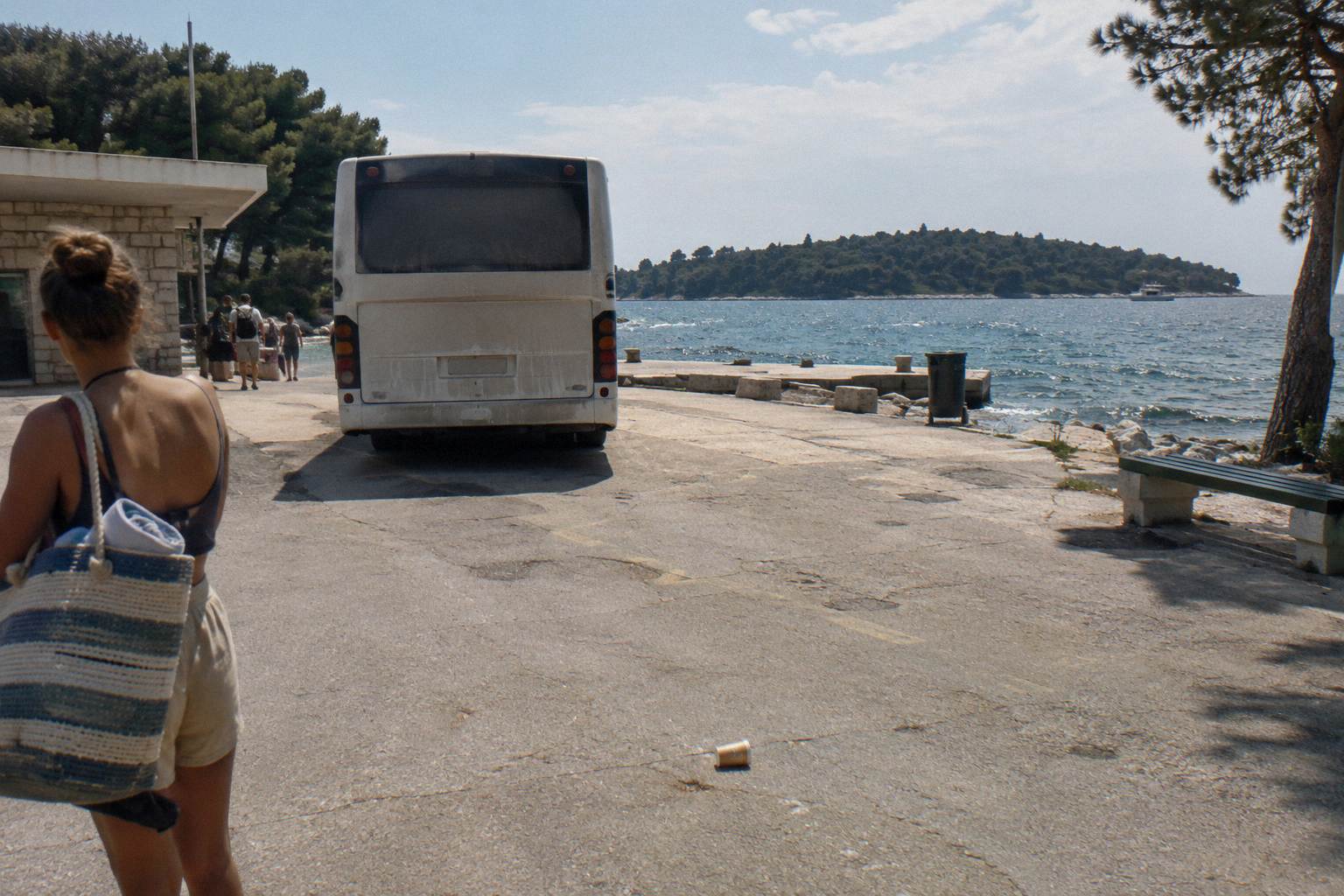
The Boat And Island Train Combo is the Fažana option built around the tourist train. It runs 4 to 6 hours, includes a boat tour of the 14 islands with guided narration, a professional guide, a bottle of water, and free tombola or quiz activities on board. The park ticket is not included and is bought on the island, and the swim at Sv. Jerolim has its own ticket bought on the island too. For the Tito sites, the train is how the island's distances get covered without walking the full circuit. More of these guides are collected on Brijuni National Park Tours.
From Zagreb, the day trip is 12 hours with the entrance tickets included: boat ride to the island, guide at the park, air-conditioned transport both ways, hotel pickup and drop-off, port pickup and drop-off, and all taxes and fees. Food and drinks are not included. With tickets covered and transfers handled, the only thing left to arrange on the island is lunch and the route between the museum and the rest. The minimum age is 1.
From Rijeka, the day tour runs 11 hours with air-conditioned transport and a named itinerary: the tourist train, the Roman villa in Verige Bay, the Safari Park and St. German's church. The entrance ticket is excluded, and the price is on the booking page rather than printed here. Its inclusion of St. German's church, the 1481 building with copies of frescoes and Glagolitic inscriptions, makes it the most explicitly sight-driven of the four.
Whichever of the three you weigh, the deciding column is the ticket: included on the Zagreb trip, bought on the island for the train combo, excluded on the Rijeka tour. The wider comparison of every way to visit Brijuni puts these four against the water-only trips.
Where On The Island Do You Find The Tito Material?
The Tito sites cluster near the port and museum area of Veliki Brijun: the Cadillac Eldorado stands in front of the museum, and the photo exhibition sits within the permanent exhibitions the park describes, alongside St. German's church and the Kupelwieser exhibition. The White Villa itself dates from his residency since 1953 and anchors the island's southwest.
The park's own description of the island's exhibitions, at the park's Tito pages, is the fullest account of what the exhibition holds. The practical point for a day visitor is that everything Tito-related is a short walk from where the boats and the train arrive, so the Tito layer of the island takes an hour or two rather than a full day, and it stacks neatly in front of the Safari Park or the bays.
The photo exhibition's flags are the detail visitors tend to remember: 60 countries, 90 visits, the geography of a non-aligned summer capital in one room. The Cadillac outside completes the picture, 18,000 miles of park driving ending in 1979, the same month as Tito's last stay on the island.
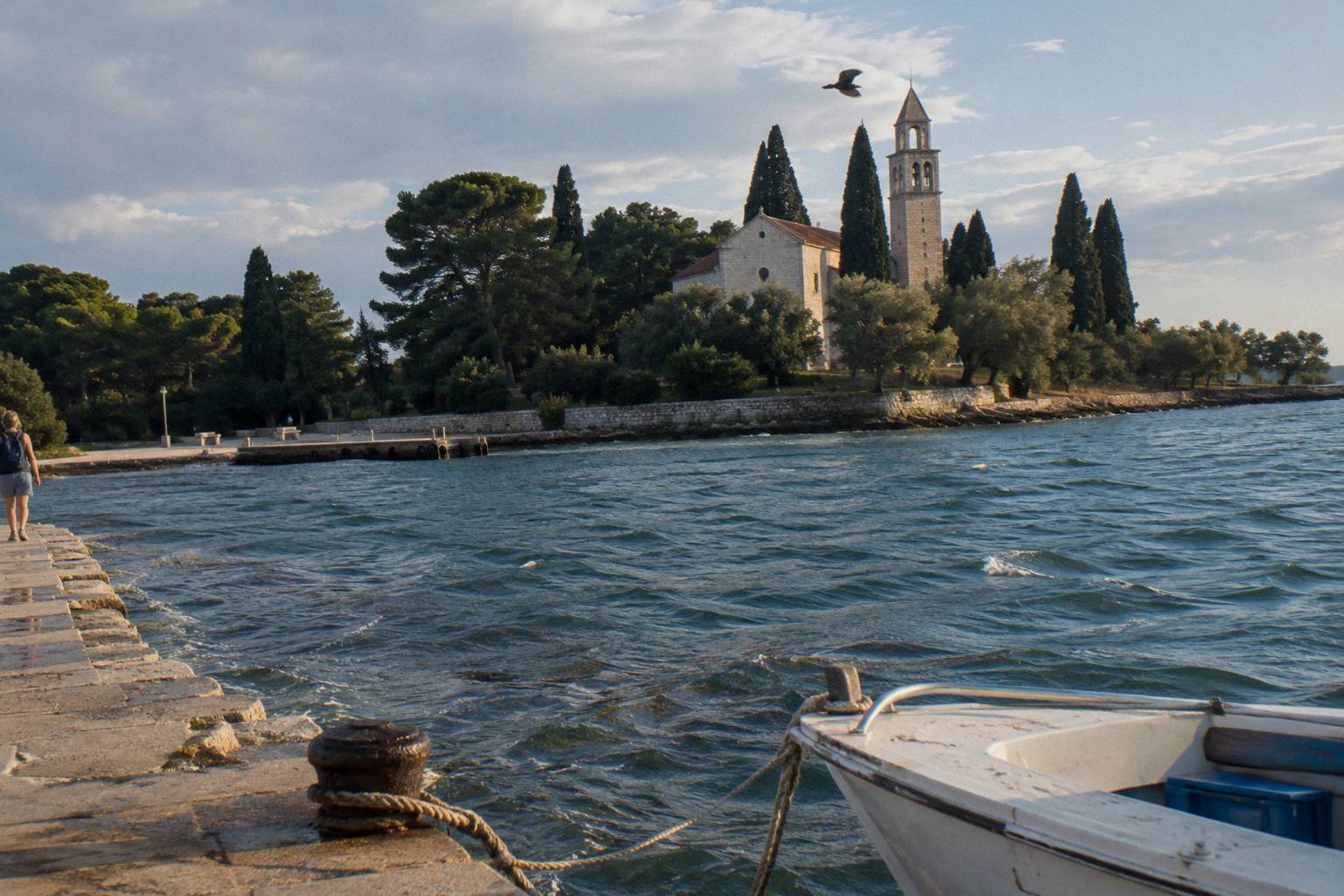
Koki the yellow-crested cockatoo belongs to the same layer, a bird that outlived the era it names and became a legend of the islands in its own right. The park tells the story at its page on Koki. Beyond the Tito material, the landing tour's Roman villa, dinosaur footprints and olive tree fill out the rest of the island day, from a 1st century BC villa to a 1,600-year-old olive tree that still bears fruit.
The rest of the island day deserves its own quick map, because the Tito layer sits among older things that are easy to miss. More than 200 dinosaur footprints, believed made 130 to 100 million years ago, lie at four sites, with a three-toed print visible in a limestone block as you leave the boat at Veliki Brijun port. The Safari Park covers about 9 hectares at the north end with around 80 herbivores, including Lanka the Indian elephant, a gift from Indira Gandhi in 1972. The train ride that several landing trips use passes the golf course, the castle and the Kupelwieser-era buildings along the coast, with Mali Brijun and Fort Brioni Minor visible across the water.
| Island sight | Era | Reachable on a landing day | The park's own note |
|---|---|---|---|
| Tito photo exhibition | Opened 1984 | Yes, near the port and museum | Flags of 60 countries, 90 visits |
| Cadillac Eldorado | 1953 to 1979 | Yes, in front of the museum | Rental by reservation, not all year |
| Safari Park | Founded in the Tito era | Yes, just over 3 km from the port | About 80 herbivores; animals must not be fed |
| Roman villa, Verige Bay | 1st century BC onward | Yes, on the west side of the island | Part of the Roman Emperors Route |
| Old olive tree | About 1,600 years old | Yes, on foot | Still bears fruit |
| Dinosaur footprints | 130 to 100 million years | Yes, a print visible at the port | More than 200 prints at four sites |
How Does The Park's Own Island Visit Fit Around The Tito Sites?
The park runs its own guided excursion to Veliki Brijun from Fažana: about 15 minutes by boat, about 3.5 hours on the island, with a guide, a one-hour tourist train ride, the Safari Park and the permanent museum exhibitions included, the rest on foot. Tickets are timed and bought at the park office at Brionska 10 or online.
This excursion is the park's own product, and it is the other route to the Tito exhibition for anyone who prefers to arrange the island directly. Guides work in Croatian, Italian, German, Russian and English. Tickets are timed: entering earlier or later than the time on the ticket is not possible, there is no print-out needed because the barcode is shown when boarding, and tickets cannot be exchanged or refunded. Children up to 7 go free, and groups of 25 or more get a discount.
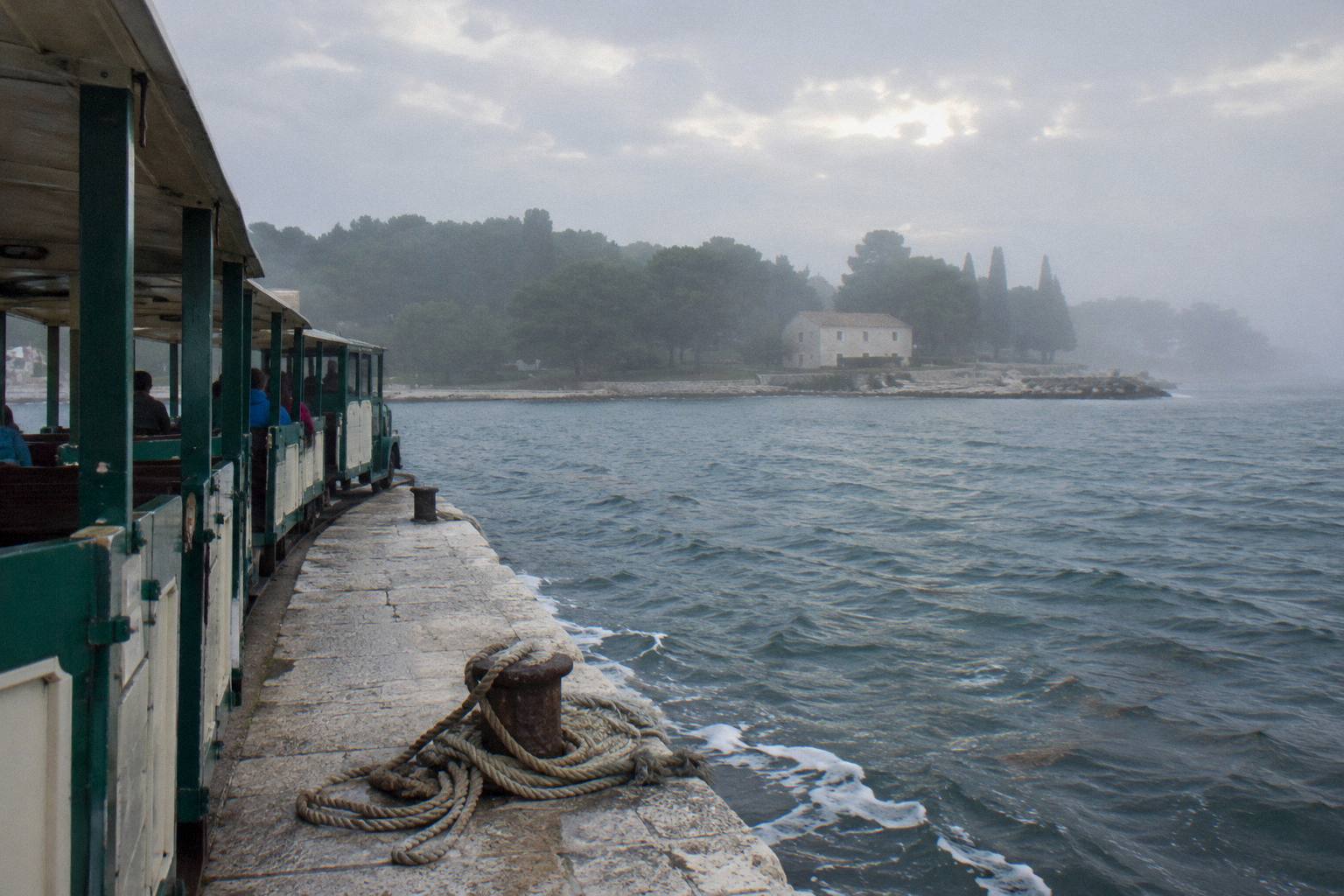
The train ride runs along the coast past the golf course, the castle and the early 20th century buildings of the Kupelwieser period, with Mali Brijun and Fort Brioni Minor visible across the water. A panoramic route along the west side passes the Vrsar and Vanga islets, the Tegetthoff Fortress, the remains of the zoo that operated until 1995 and the Roman villa in Verige Bay. The walk includes St. German's church, the Tito photography exhibition, the Kupelwieser exhibition, the natural history exhibition and the Boathouse interpretation centre. Individual visitors can return to Fažana on any park boat, which gives the day a flexibility the timed entry does not. The park lays out the mechanics at its how-to-reach-Brijuni page.
Set against the four landing trips here, the choice is simple in shape: the park excursion covers the museums and the train but no boat tour of the archipelago, while the trips covered here add the water, the pickup or the paddle, at their own prices. If you are weighing both, the explanation of the park ticket and what it includes is the page to read next.
What Should A Tito-focused Day On The Island Look Like?
Book a landing trip with the park ticket already inside it, aim for the museum and the Cadillac first while legs are fresh, then let the train or the walk carry you to the Safari Park and the bays. The four landing trips all leave room for this order; the difference is only how much water and road sit on either side of it.
For a stay on the coast, the Fažana departures keep the day compact: the kayak trip at 3 hours 30 minutes of guided paddling plus island time, or the train combo at 4 to 6 hours with the archipelago thrown in. For a stay in Zagreb or Rijeka, the day trips convert the island into a feasible long excursion, 12 and 11 hours, with transport and, on the Zagreb version, tickets handled.
One practical note carries over from the park's own code of conduct: swimming is allowed only at marked bathing areas, and feeding or disturbing animals is prohibited, which applies in the Safari Park as much as on the shore. Park wardens may ask to see tickets and identity documents, so keep both reachable. Dogs are allowed on the island on a leash, though not in the train, the museums or the Safari Park, and a dog ticket is charged. The advice on bringing a dog or a stroller on a Brijuni tour covers the boat side of that question.
Timing also matters seasonally. The park runs its excursions all year with a reduced winter schedule, and it changes the boat schedule for weather, so the booking page shows the departures for any given week. If you are planning around the shoulder months, the month-by-month guide to the best time for a Brijuni trip is the companion read.
For anyone staying through a whole island day, the guide to how long you can stay on Brijuni on a landing tour sets out what a full ticket allows. However long the day, the Tito layer itself stays small and walkable: one exhibition, one car, one villa, one bird, and thirty-two years of a country's summers behind them.
Common Questions About Tito On Brijuni
What Did Tito Leave On Brijuni?
The White Villa, his official residence from 1953; the photo exhibition 'Josip Broz Tito on Brioni', opened in 1984, with flags for the 60 countries whose representatives made 90 visits; his 1953 Cadillac Eldorado convertible, displayed in front of the museum; and Koki, his yellow-crested cockatoo. He first visited in 1947 and his last stay ended on 29 August 1979.
Can You See Tito's Exhibition On A Sunset Or Dolphin Cruise?
No. Every sunset, dolphin, swim and sail trip covered here stays on the water with no landing. The exhibition, the Cadillac and the villa are on Veliki Brijun, and only the four landing trips go ashore there.
Which Trips Land On Veliki Brijun?
Four: Kayak, Full-Day Ticket (from €75 per person, ticket included), Boat And Island Train Combo (from €150 per person, ticket bought on the island), Day Trip From Zagreb (from €255 per person, tickets included) and Day Tour From Rijeka (entrance ticket excluded; the booking page shows the price).
Is The Park Ticket Included On Landing Trips?
On two of the four: the Kayak, Full-Day Ticket trip and the Zagreb day trip include it. The Boat And Island Train Combo and the Rijeka day tour do not; the ticket is bought on the island or excluded.
Can You Drive Tito's Cadillac On Brijuni?
Rental is by reservation only and is not available all year, so treat it as something to ask the park about rather than a fixed part of a day. The car itself, a 1953 Cadillac Eldorado convertible used until 1979, is displayed in front of the museum.
Where Do The Landing Trips Leave From?
The kayak trip and the train combo leave from Fažana, the main pier area at Brionska street. The Zagreb and Rijeka day trips leave from those cities by road, with hotel pickup listed on the Zagreb trip.